SS-31, also known as elamipretide, is a mitochondria-targeting peptide designed to protect and improve mitochondrial function. Mitochondria are the parts of cells responsible for producing energy, so SS-31 is studied for its potential to help cells make energy more efficiently and withstand oxidative stress. It works by interacting with cardiolipin, a key phospholipid in the inner mitochondrial membrane, which helps stabilize mitochondrial structure and support more efficient energy production. Because of this, SS-31 has been investigated for possible benefits related to fatigue, muscle function, cardiovascular health, and protection of tissues under metabolic stress.
Potential benefits associated with SS-31 in research include improved cellular energy output, reduced oxidative damage, better muscle endurance, and support for heart and kidney function in certain disease models. It has also been studied for age-related mitochondrial decline, where improving mitochondrial efficiency could theoretically help tissues function better over time. Unlike many general antioxidants, SS-31 is notable because it is designed to go directly to the mitochondria rather than acting broadly throughout the body...
SS-31, also known as elamipretide, is a mitochondria-targeting peptide designed to protect and improve mitochondrial function. Mitochondria are the parts of cells responsible for producing energy, so SS-31 is studied for its potential to help cells make energy more efficiently and withstand oxidative stress. It works by interacting with cardiolipin, a key phospholipid in the inner mitochondrial membrane, which helps stabilize mitochondrial structure and support more efficient energy production. Because of this, SS-31 has been investigated for possible benefits related to fatigue, muscle function, cardiovascular health, and protection of tissues under metabolic stress.
Potential benefits associated with SS-31 in research include improved cellular energy output, reduced oxidative damage, better muscle endurance, and support for heart and kidney function in certain disease models. It has also been studied for age-related mitochondrial decline, where improving mitochondrial efficiency could theoretically help tissues function better over time. Unlike many general antioxidants, SS-31 is notable because it is designed to go directly to the mitochondria rather than acting broadly throughout the body...
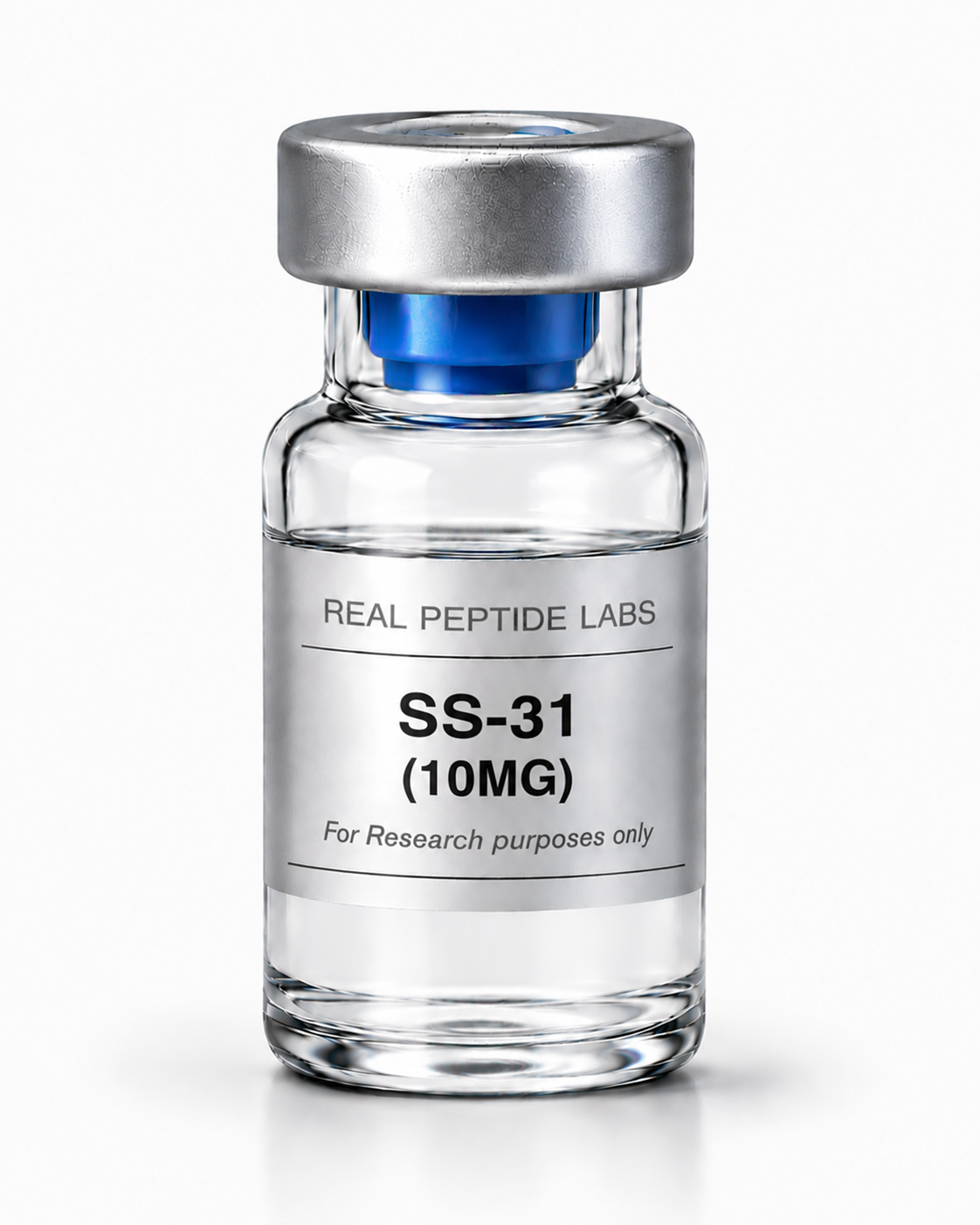 Image 1 of 1